




Contact
Office: 530.823.3628
Mailing Address
1431 Merry Knoll Road
Auburn, CA 95603
Serving greater Sacramento and neighboring Foothill communities
Unless noted otherwise, all content and images © Dog & Whistle Goose Control 2018. All rights reserved.

Services & Page Links
Canada Geese Information
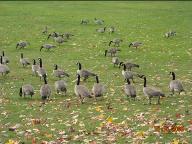
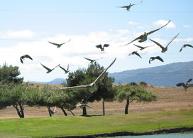
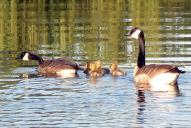
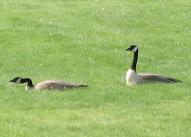
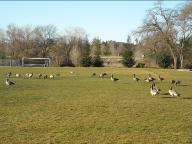
The sub-
The Rocky Mountain Population nests in the northern Rocky Mountains and migrates southward, including into northern California, via the Pacific Flyway (see Flyway map at bottom of page). The Pacific Population resides in the more western states. In the milder climates of the western states the geese are generally non-
US Fish & Wildlife Service estimates the 2011 Pacific Population at 166,300, a 15% increase over the prior year’s estimate USFWS Waterfowl Population Status, 2011 report
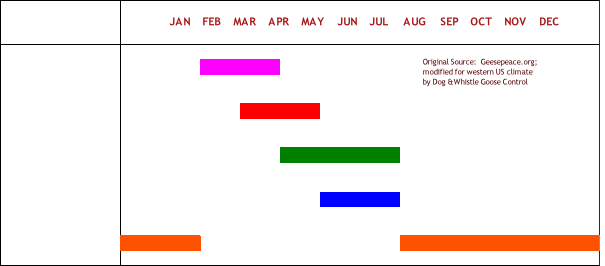
Nesting occurs in spring with 5-
Molting is the replacement of adult flight feathers in summer, coinciding with later stages of gosling development. Molting lasts about one month for each bird. There is some variation in dates with when molt starts, resulting in a six to eight week molt season. During molt geese are flightless and more vulnerable to predators. Hazing with dogs is curtailed during this period to ensure flightless adult geese and pre-
Diet Primarily herbivores, preferring tender young plants, with an affinity for fertilized lawns! They will also eat grains, cattails, small aquatic insects and snails.
Social Style Form strong social bonds with mate and family group. When a large flock of geese is dispersed by the dogs, the geese typically break up into the social units of 25 to 40 birds. Canada geese are monogamous, pairing for life. When conditions allow, they will nest near each other in gang broods of about 20 birds.








Why are Canada Geese considered a nuisance?
- Most obvious are the droppings of 1-
3 lbs. per goose per day which deter people from using parks, picnic areas and other recreational sites such as athletic fields and golf courses. - Maintenance people have to spend time and money cleaning up the goose droppings.
- Droppings contain nitrogen, bacteria and viruses creating a health concern from which disease may spread to other bird populations.
- During nesting, Canada geese can be aggressive and territorial.
- Canada geese overgraze lawns, eat crops and trample turf.
Federally Protected Both migratory and resident Canada geese are federally protected under the Migratory Bird Treaty Act. Birds and their eggs or nests cannot be harmed or destroyed (as well as a host of other actions) without federal and state permits. Fines for misdemeanor convictions under the Migratory Bird Treaty Act can be as high as $15,000. See Regulations & Links page for additional information.
Migratory Canada geese nest and molt in Canada and the northern United States during spring/summer and migrate southward during the fall to spend the winter. They may mix with resident Canada geese during the migration period.
Resident Canada geese nest and molt in the lower United States during spring and summer and “micro-
Canada Geese Activity Calendar
Cartoon use with permission and courtesy of Linda Cousey (© Linda Cousey 2007) www.aperfectworld.org
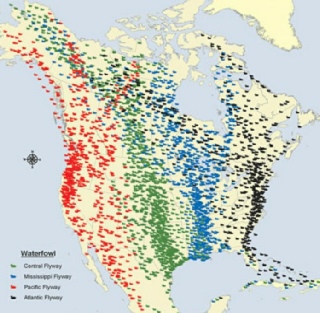

Migratory Flyways for Waterfowl
(including Canada geese)
Pacific Flyway -
Mississippi Flyway -
Source: US Fish & Wildlife Service
| Goose Dogs at Work |
| Potpourri |
| More Placed Goose Dogs |
| Dog Vest Measuring Guide |
| Dog Vest Policies |